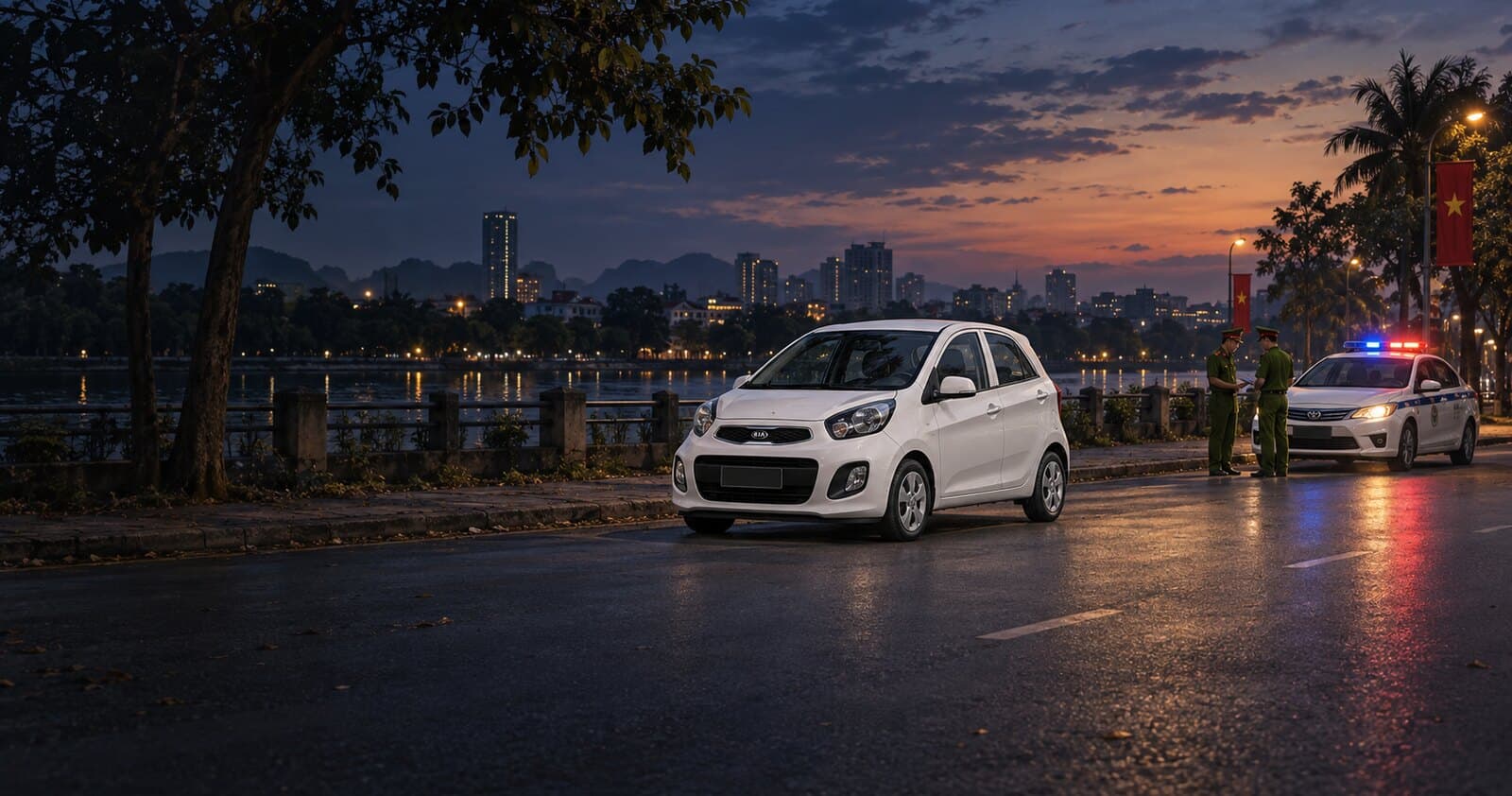
On 15 September, a vehicle rented from VinRent was found to be connected to an attempted gold theft from a jewellery shop in Vietnam. From the moment we received information about the incident, our team remained in contact with the police and provided data that helped detain the suspects.
We believe it is important to explain our role in this situation and to thank the police officers for their prompt work.
The photograph in the header is a staged illustration, not an image from the scene.
What happened
According to Tuổi Trẻ and VnExpress, at around seven in the morning on 15 September a man and a woman entered the Tiến Viễn jewellery shop in Sông Cầu ward, Đắk Lắk province. The man kept the owner talking while the woman opened a display case with the key that had been left in the lock and took three gold bangles worth about 208 million đồng — roughly 7,700 US dollars. The owner noticed and shouted; the woman dropped the bangles under the cabinet and both ran out into the street.
A white car with two more people inside was waiting across the road. Alerted by the shop's alarm, the local police organised an interception together with the provincial traffic police and the Xuân Lộc commune police. About an hour later, at around eight in the morning, the car was stopped on highway QL1D in Quy Nhơn Nam ward, Gia Lai province, forty kilometres from the shop. Four foreign nationals were detained — three men and one woman. The jewellery never left the shop.
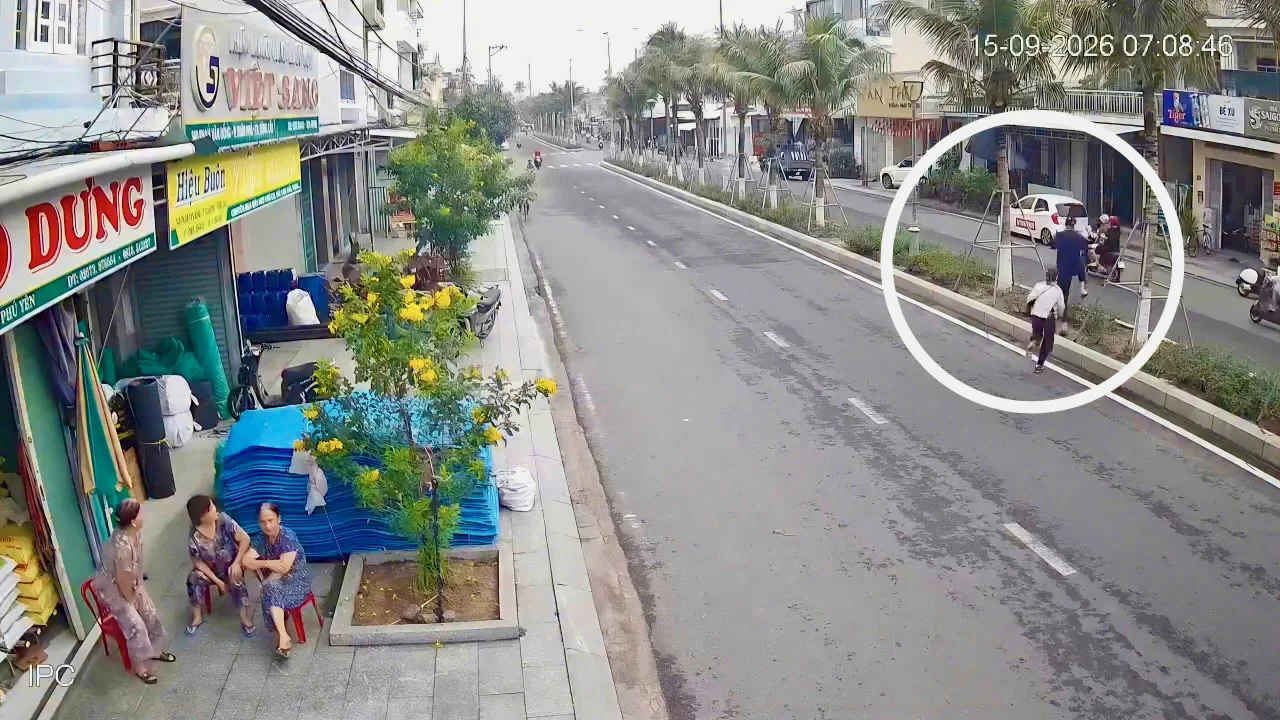
Security camera still, 15 September 2026, 07:08. Source: Tuổi Trẻ.
The car they used had been rented from VinRent. We are not in a position to give a legal assessment of the detainees' actions: establishing the full circumstances is a matter for the investigation. Those detained have the status of suspects, and the investigation continues.
How our team responded
From the very beginning, VinRent cooperated with the police: we remained available for contact and provided the data we held on the rental and the vehicle, which helped in locating and detaining the suspects.
In such a situation, what matters is the speed of response, the accuracy of the information and the team's readiness to get involved. A properly documented rental and readily available records make it possible to respond quickly to enquiries and to assist in establishing the circumstances.
We do not publish renters' personal data or details of our interaction that could affect the investigation. At the same time, our position is unequivocal: VinRent does not tolerate the use of rental vehicles for any unlawful purpose and cooperates with the competent authorities. On the same day, we published an official statement.
A rental company's responsibility continues after the keys are handed over
Most of our customers' trips are holidays, family itineraries and business meetings. But the work of a rental company also involves situations that cannot be foreseen in advance.
That is why, when choosing an operator, the car and the rental price are not the only things that matter. It matters how the trip is documented, how documents are checked and how communication is organised; whether there is a team that remains reachable after the car has been handed over and is able to work with local services if difficulties arise.
There is also a direct legal side to this. Since 1 March 2026, Decree 336/2025/NĐ-CP has been in force: for renting out a car without a driver to a person who does not hold a valid licence of the required category, the company is liable to a fine of 56 to 60 million đồng. Checking documents at handover is a legal requirement placed on the rental company, not pedantry on the part of a member of staff.
This case demonstrated the practical value of such work. For our part, we did what was necessary to help the police and remained in contact throughout the proceedings.
What we ask of our renters
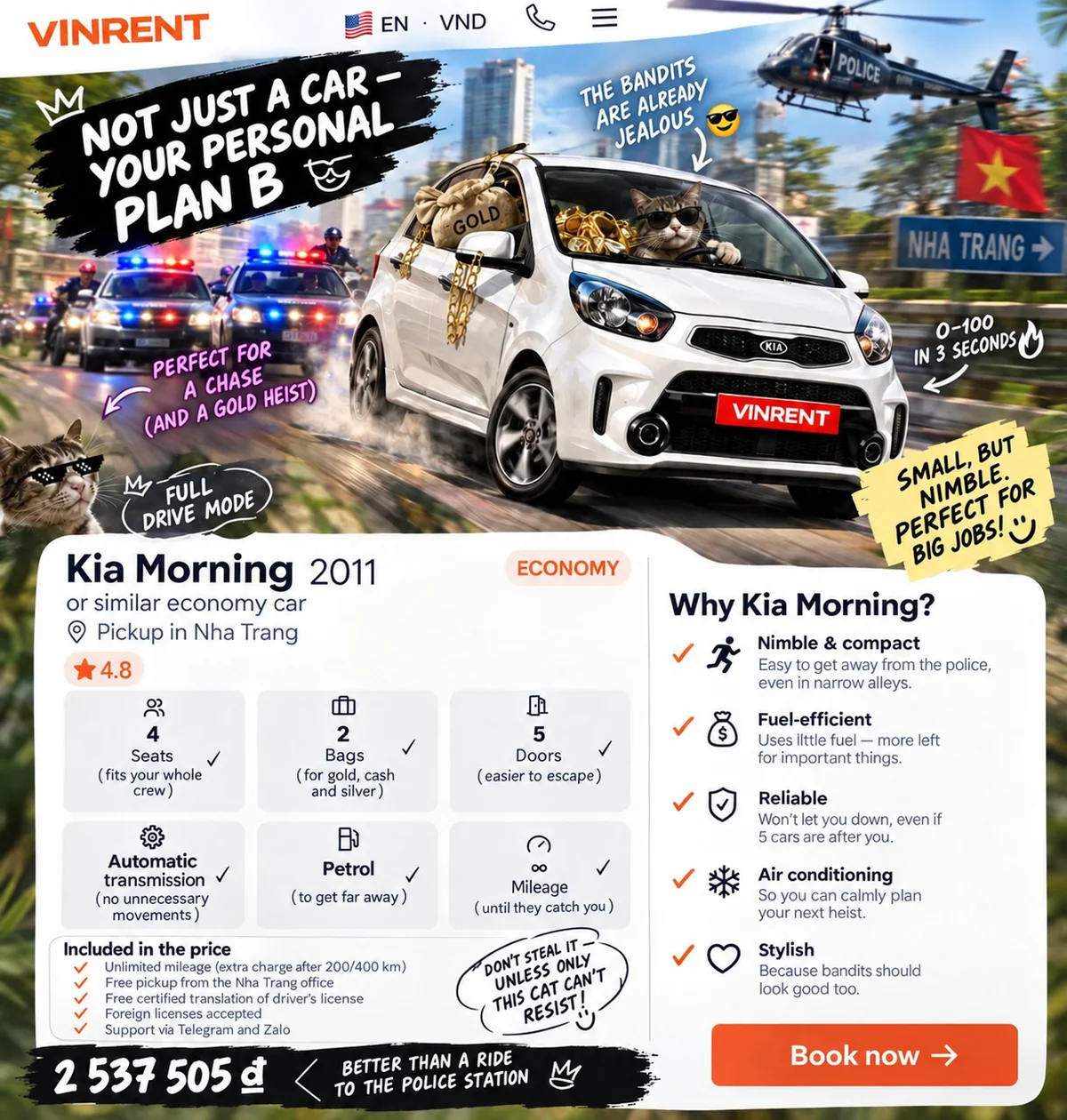
This illustration is a joke — open it to read it. It does not depict the participants in the events, the vehicle or the location of the incident.
But on a serious note, here is a list on which we make no exceptions. Some of these rules are set by Vietnamese law, others by our rental agreement.
1. Driving licence. Your national driving licence together with an international one under the 1968 Convention — you need to carry both. Permits issued by motoring clubs such as the AA or AAA are not accepted by the Vietnamese authorities: they are issued under a different convention and do not match the local format. Full details, including a list of countries, are in a separate article.
2. Speed limits. In built-up areas — 60 km/h on a road with a central divider and 50 km/h on an ordinary two-way road. Outside built-up areas — 90 and 80 respectively. On an expressway, no faster than 120 and no slower than 60. This is Circular 38/2024/TT-BGTVT, in force since 1 January 2025; on any particular stretch, the signs decide.
3. Alcohol — zero. Not "a little is fine", but exactly zero: the law prohibits driving with any alcohol in the blood or breath, with no lower threshold. Fines start at 6–8 million đồng and rise to 30–40 million with a 22–24-month licence suspension. Refusing a test is penalised as the highest degree of intoxication. The vehicle is impounded on the spot.
4. Drugs. The Criminal Code punishes possession, transport and sale, and the threshold for prosecution starts at 0.1 gram. For the offences of production and sale, the maximum penalty remains the death penalty.
5. Running a red light. 18–20 million đồng and four points deducted from the licence. The amount has tripled since 2025. Such fines reach the rental company from cameras one to two weeks after the trip — that is partly why the deposit is returned within ten days.
6. Street racing. This is not a traffic violation but a criminal offence: up to three years' imprisonment for taking part and up to life imprisonment for organisers. A participant's vehicle is confiscated and their licence is taken away for 22–24 months.
7. Phone at the wheel. Holding a phone in your hand and using it while driving is prohibited: 4–6 million đồng and four points. A phone mount and a headset raise no objections.
8. Seat belts and children. Belts on every seat that has one; 800,000 – 1 million đồng for an unbelted driver and for unbelted passengers alike. From 1 July 2026, a child under 10 years old and shorter than 1.35 metres may not be seated in the same row as the driver — the same fine applies. From 15 August 2026, the absence of a child restraint system is punishable by a warning.
9. Only those named in the agreement may drive. The wording of our terms is verbatim: "You will not allow anyone other than a person listed in the trip details as an Approved Driver to drive the vehicle you booked." A second driver can be added for a small daily surcharge — let us know in advance or at handover and bring their documents.
10. The car is for private trips. Not for carrying passengers for a fee, not for Grab, not for deliveries, not for subletting. All of this is possible only with separate written approval from us.
11. Do not cross the border. Under the rental rules, the car must not leave the territory of Vietnam. Taking a Vietnamese car into Laos or Cambodia requires a separate cross-border permit issued for a specific vehicle.
12. The vehicle is not used for any unlawful purpose. This is the wording of our official statement, and it is not a figure of speech. If the vehicle is used unlawfully, the renter bears full financial liability for any related claims, losses and damage, and on an official request from the authorities we hand over everything we hold under the agreement.
Thanking the police for their prompt response
VinRent expresses its gratitude to the police officers involved in locating and detaining the suspects. Their promptness and coordinated actions made it possible to respond quickly to the incident.
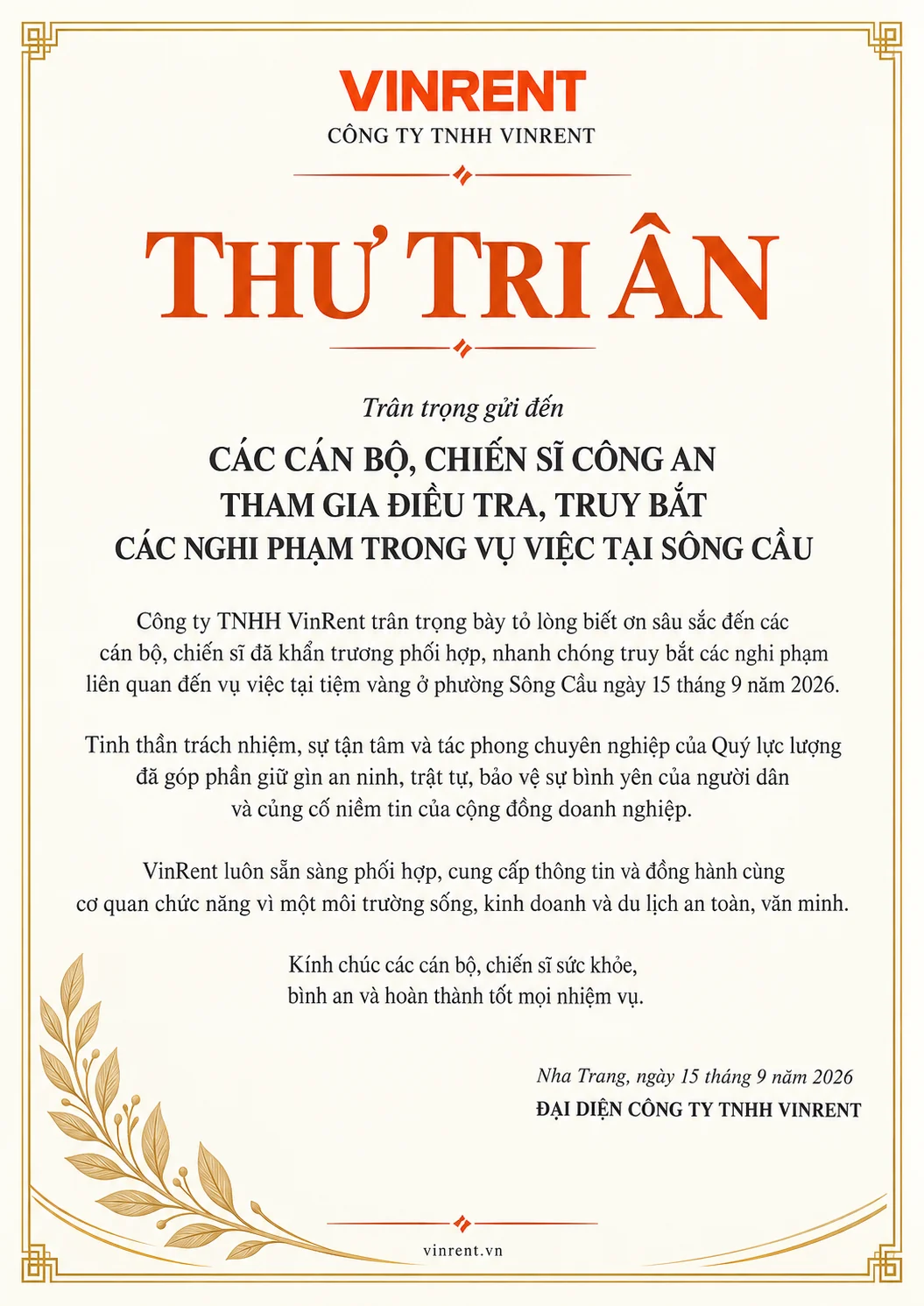
A letter of appreciation prepared by VinRent.
For us, Vietnam is where we live and work. The safety of the country's residents and visitors, respect for the law and responsible business conduct are the foundation of our work.
We will continue to cooperate with the competent authorities and to do our part so that car rental remains a clear, reliable and safe service.